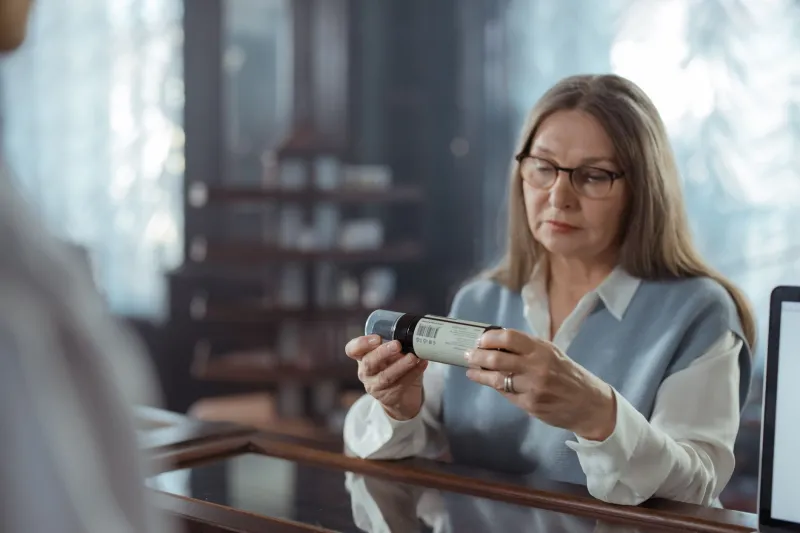
Not the Same Pill: How Generic Gabapentin Manufacturer Switches Affect Your Treatment

The Pill That Changed Without Warning
You pick up your monthly gabapentin prescription, open the bottle, and notice something different. The capsule is a slightly different color. The markings have changed. When you ask the pharmacist, you are told it is the same medication—just from a different manufacturer. You are reassured it works exactly the same way. But over the following weeks, your symptoms feel less controlled, or perhaps new side effects have appeared that were not there before.
This experience is far more common than most patients realize, and it is rooted in a legitimate but often misunderstood aspect of pharmaceutical regulation: the rules governing generic drug equivalence.
What the FDA Means by "Bioequivalent"
The U.S. Food and Drug Administration approves generic medications based on a standard called bioequivalence. Under this framework, a generic drug must demonstrate that it delivers the active ingredient—in gabapentin's case, the compound itself—into the bloodstream at a rate and extent that does not differ significantly from the brand-name reference product, Neurontin.
In practical terms, the FDA permits a statistical range in which the generic's absorption metrics can fall: typically between 80 and 125 percent of the reference drug's performance. For most patients and most medications, this range is clinically irrelevant. However, gabapentin is not a straightforward drug to absorb.
Unlike many medications that pass through intestinal membranes freely, gabapentin relies on a saturable transport system. This means the body can only absorb so much at one time, and absorption efficiency actually decreases as the dose increases. This transport-dependent mechanism makes gabapentin unusually sensitive to formulation variables—the precise way a tablet or capsule is constructed around the active ingredient.
The Role of Inactive Ingredients
Every pill contains more than just the active pharmaceutical compound. Binders, fillers, coatings, disintegrants, and lubricants are added to give the medication its physical form, help it dissolve at the right rate, and ensure consistent manufacturing. These substances are called excipients, and the FDA does not require generic manufacturers to use the same ones as the brand-name product or as each other.
For gabapentin, excipient differences matter more than they might for simpler medications. Variables such as particle size of the active compound, the type of filler used, and how quickly a capsule or tablet breaks apart in stomach acid can all influence how efficiently gabapentin reaches its intestinal transport system. Two products that pass bioequivalence testing in a controlled clinical study may still behave somewhat differently in real-world patients whose gastrointestinal conditions, meal patterns, and body composition vary considerably.
This is not a flaw in the regulatory system—it is a known limitation that becomes relevant for a subset of sensitive patients, particularly those on gabapentin for conditions where stable blood levels are critical, such as epilepsy.
Why Pharmacies Switch Suppliers
Pharmacies and pharmacy benefit managers operate within a competitive market. Drug wholesalers regularly adjust which generic manufacturers they source from based on pricing contracts, supply availability, and distribution agreements. When a lower-cost supplier wins a contract, your pharmacy may switch to that manufacturer's version of gabapentin without notifying you directly. From a regulatory standpoint, they are not required to do so—the product is considered therapeutically equivalent.
For patients who have been stable on one formulation for months or years, an unannounced switch can introduce subtle changes that are difficult to attribute to the medication without knowing the switch occurred. Symptoms that return, side effects that intensify, or a general sense that the medication is not performing as expected may all stem from a manufacturer change rather than disease progression or tolerance.
Recognizing a Formulation-Related Change
Not every patient will notice a difference when their gabapentin manufacturer changes. Many will experience no change whatsoever, and that is consistent with the bioequivalence data. However, certain patients appear to be more susceptible to formulation variability:
- Those managing seizure disorders, where even modest fluctuations in drug levels can have serious consequences
- Patients on higher doses, where gabapentin's saturable absorption makes consistency more difficult to achieve
- Individuals with gastrointestinal conditions that already affect drug absorption
- Those who have previously experienced side effects that were carefully managed by dose adjustments
If you notice changes in your symptom control or side effect profile after a refill, check the manufacturer name on your current bottle and compare it with a previous one. This information is typically printed on the label or can be retrieved from your pharmacy's dispensing records.
Practical Steps to Request Consistency
Patients have more leverage than they often realize when it comes to requesting a specific generic manufacturer. Here are concrete actions worth considering:
Ask your pharmacist to document your preferred manufacturer. Many pharmacy systems allow a notation to be added to your profile. This does not guarantee supply, but it gives the pharmacist a preference to work with.
Request a dispense-as-written notation from your prescriber. In some cases, a physician can indicate on a prescription that a specific brand or manufacturer should be used. This is more commonly honored for medications with narrow therapeutic indices.
Inquire about manufacturer consistency before filling. When calling in a refill or dropping off a prescription, ask which manufacturer's gabapentin is currently in stock before the prescription is filled.
Keep a symptom log. Documenting how you feel in the days following each refill creates a record that can help your prescribing physician identify patterns and advocate on your behalf.
Consider mail-order pharmacies with stable supplier contracts. Some mail-order pharmacy programs source from a limited number of manufacturers and may offer greater consistency over time.
A Conversation Worth Having With Your Doctor
If you suspect that manufacturer variability is affecting your treatment, this is a conversation that deserves dedicated time at your next appointment. Come prepared with the manufacturer names from recent bottles, a timeline of when symptoms changed, and a clear description of what is different. Your physician may be able to adjust your prescription documentation, refer you to a compounding pharmacy in exceptional cases, or simply validate your experience and help you monitor more closely going forward.
Gabapentin therapy requires careful calibration, and that process should not be quietly disrupted by supply chain decisions made without your knowledge. Staying informed about what is in your bottle is a reasonable and achievable form of self-advocacy.